Stair Railing Guide: Types, Materials & Cost for GTA Homes
From classic wood to sleek glass and cable, here's how to choose the right stair railing for your GTA home — styles, materials, Ontario Building Code requirements and real installation costs.
A stair railing does more than hold onto — it sets the tone for your entire staircase, and in many homes, your entire entryway. At RiseOnStairs we install railings across the GTA on everything from heritage renovations to modern open-concept builds, and the right choice comes down to three things: your home's style, your budget, and Ontario Building Code requirements that every railing must meet.
Why Your Railing Choice Matters
A railing is one of the few staircase elements you touch every single day. It needs to be structurally sound, code-compliant, and visually consistent with the rest of your home. Get it wrong and you either end up with a safety issue or a railing that fights with your staircase's design instead of completing it.
Types of Stair Railings
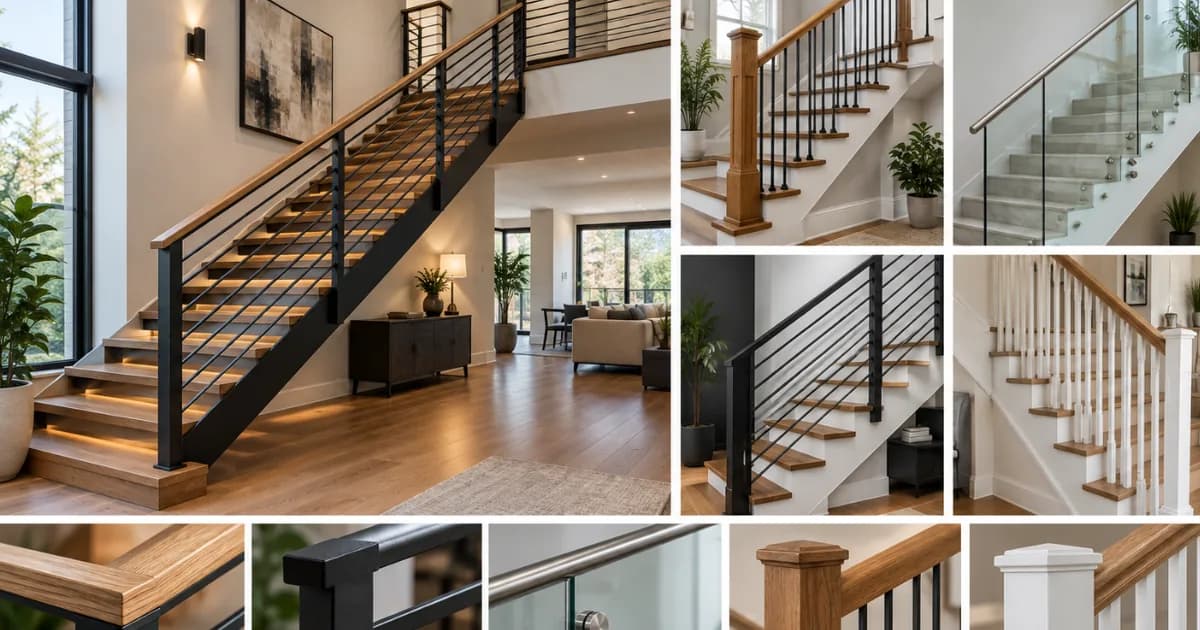
- Wood Railings — The classic choice for traditional and transitional homes. Solid oak, maple or walnut handrails paired with turned or square spindles suit heritage properties and warm, family-focused interiors.
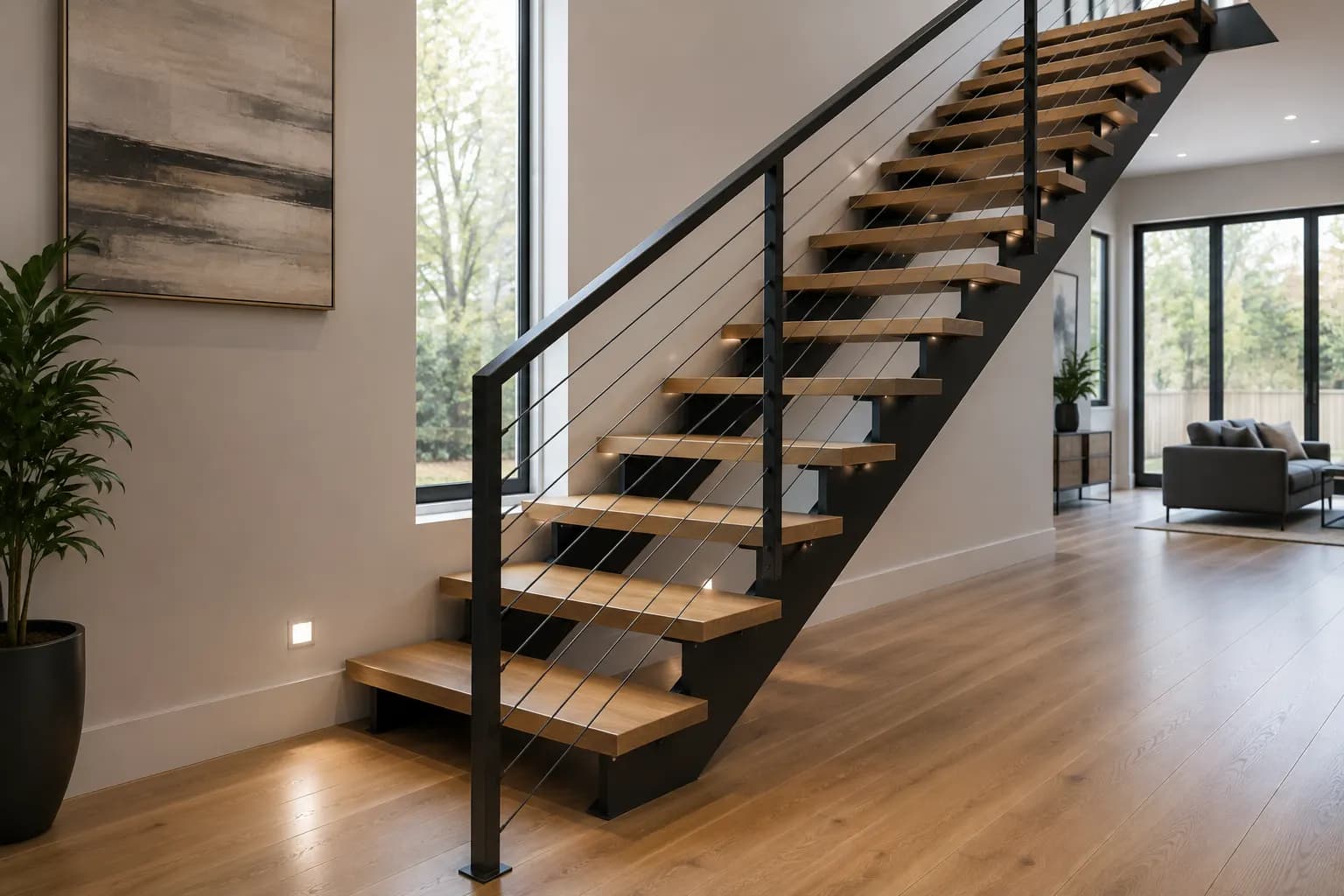
- Metal and Cable Railings — Steel or aluminum posts with horizontal cable infill are the defining look of modern GTA homes right now. They keep sightlines open, which makes narrower stairwells feel bigger.
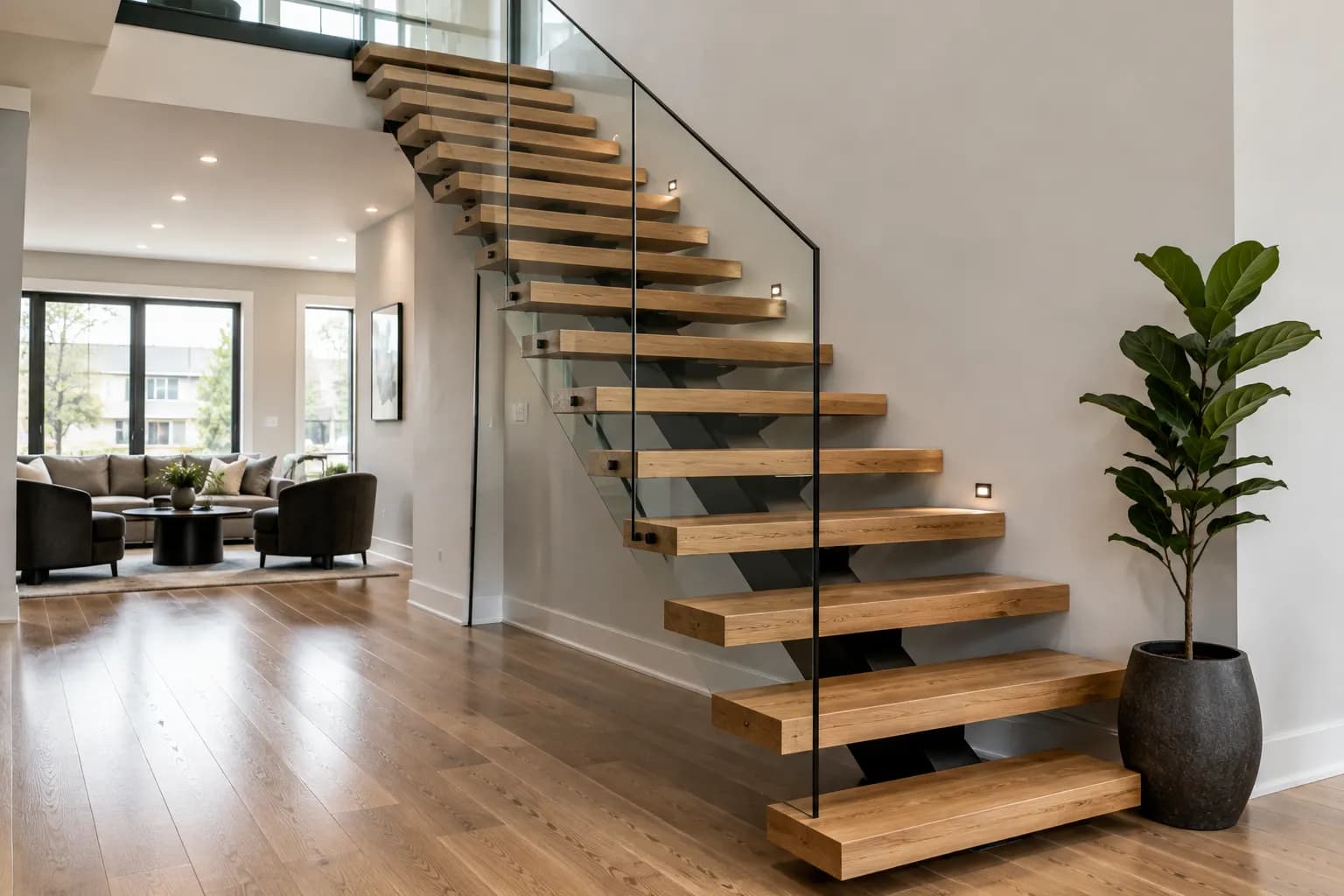
- Glass Railings — Frameless or semi-framed tempered glass panels give an unobstructed, high-end look. Popular in condos, lofts and contemporary renovations where the staircase itself is a design feature.
- Wrought Iron Railings — Ornate iron balusters remain a strong choice for estate-style and traditional homes, especially paired with a wood cap rail.
Choosing the Right Material for Your Home
If your floors and trim are wood, a wood or wood-capped railing usually reads as the most cohesive choice. Metal and cable suit homes with a lot of glass, concrete or minimalist finishes. Glass works best where you want maximum light flow between floors. We walk every client through material samples on-site before any fabrication begins, matched against your existing hardwood or metal stringer stairs so the whole staircase reads as one piece.
Ontario Building Code Requirements
Every railing we install meets Ontario Building Code (OBC) guard requirements: a minimum guard height of 900mm along the stair, rising to at least 1070mm on landings and floor areas. Baluster and cable spacing is engineered so a 100mm sphere cannot pass through — the standard used to prevent young children from slipping through or getting a head caught. We handle all of this as part of design, so you never have to think about code compliance yourself.
Cost Breakdown
Railing costs in the GTA vary by material and complexity:
- Wood railings typically run $50–$150 per linear foot installed.
- Metal and cable railings typically run $100–$250 per linear foot installed.
- Glass railings typically run $150–$350 per linear foot installed.
- Wrought iron railings typically run $80–$200 per linear foot installed.
Exact pricing depends on stair length, number of turns, and finish details — we provide a fixed, itemized quote before any work begins.
Our Installation Process
Every railing project starts with an on-site survey and material selection, followed by shop drawings so you can see the finished look before fabrication starts. Our team fabricates and finishes each railing in our Brampton workshop, then installs on-site with a final inspection to confirm code compliance and finish quality.
Whether you're renovating an existing metal stringer staircase or adding a railing to a new wooden stringer build, our team can design a railing that matches your home and meets code. Contact us for a free on-site consultation and fixed quote.
Ready to begin?
Let's bring your vision to life
Our team of master craftsmen is ready to help you design the perfect staircase or flooring for your home.