Hardwood Flooring Installation in the GTA: The Complete Guide
Solid or engineered? Which species? What will it cost? Our complete guide to hardwood flooring installation brings together everything GTA homeowners need to plan a project.
Hardwood flooring is one of the highest-impact renovations a GTA homeowner can make — and one of the easiest to get wrong if the construction type, species or finish doesn't suit your home's specific conditions. This guide brings together the full decision process we walk clients through, from Brampton to Toronto and every community in between.
Solid vs Engineered Hardwood
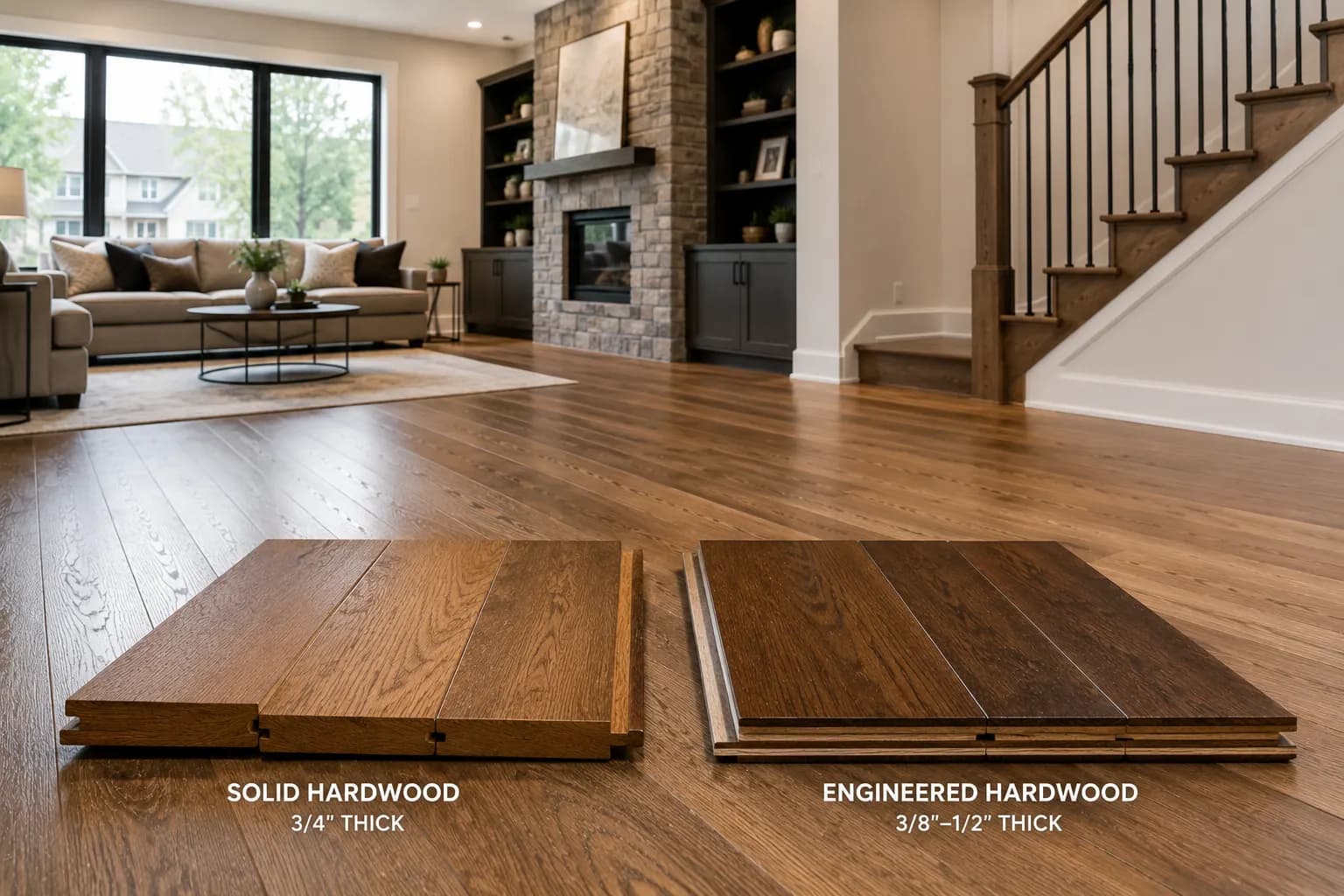
The first and most consequential decision is construction type. Solid hardwood (typically 3/4-inch) can be sanded and refinished four to six times over a lifespan that can exceed 50 years, but it is more sensitive to humidity swings and unsuitable for below-grade installations or homes with radiant in-floor heating. Engineered hardwood — a real wood veneer over a stable plywood core — resists expansion and contraction far better, making it the right choice for basements, radiant-heated homes, and any GTA home experiencing significant seasonal humidity swings. Our solid vs engineered deep-dive covers subfloor-specific scenarios in full detail.
Choosing a Species for GTA Homes
White Oak (1360 Janka hardness) is the most popular choice across the region for its balance of durability, warm tone and versatility with both traditional and contemporary interiors. Hard Maple (1450 Janka) suits a cleaner, more minimalist look. Hickory (1820 Janka) is the most durable option for high-traffic households or homes with large pets. Walnut (1010 Janka) is softer but offers unmatched character, best suited to lower-traffic areas like primary bedrooms and home offices. Plank width is a related decision: narrow 2 1/4-inch strip flooring is stable and timeless, while wide 5-7 inch planks are the current preference for most GTA renovations, though wider boards move more with humidity and typically pair better with engineered construction.
Hardwood, Laminate or LVT?
Solid and engineered hardwood are not the only flooring options, and for some rooms they are not even the best one. Basements, bathrooms and mudrooms are generally poor candidates for any wood-based product given moisture exposure — luxury vinyl tile (LVT) offers a genuinely waterproof alternative with a similar visual result to hardwood at a lower cost point. Laminate flooring is the most budget-conscious option for secondary living spaces where authentic wood underfoot is less of a priority. Our laminate vs LVT comparison breaks down which suits which room and budget.
What Does Hardwood Flooring Cost in the GTA?
Solid oak or maple hardwood typically runs $8-$14 per square foot supply and install; engineered hardwood runs $10-$18 depending on species, veneer thickness and finish; LVT and laminate run $5-$9 per square foot installed. Our complete flooring cost guide breaks this down further by room type, species and construction complexity, including what drives quotes toward the higher or lower end of each range.
Maintaining Your Investment
A quality hardwood installation, properly maintained, should still look excellent after twenty years or more. The two habits that matter most are humidity control (35-55% relative humidity year-round via a whole-home humidifier if you have forced-air heat) and proactive refinishing before wear becomes severe. Our complete maintenance guide covers the seven habits that separate floors that age gracefully from those that need premature replacement.
Installation Process and Timeline
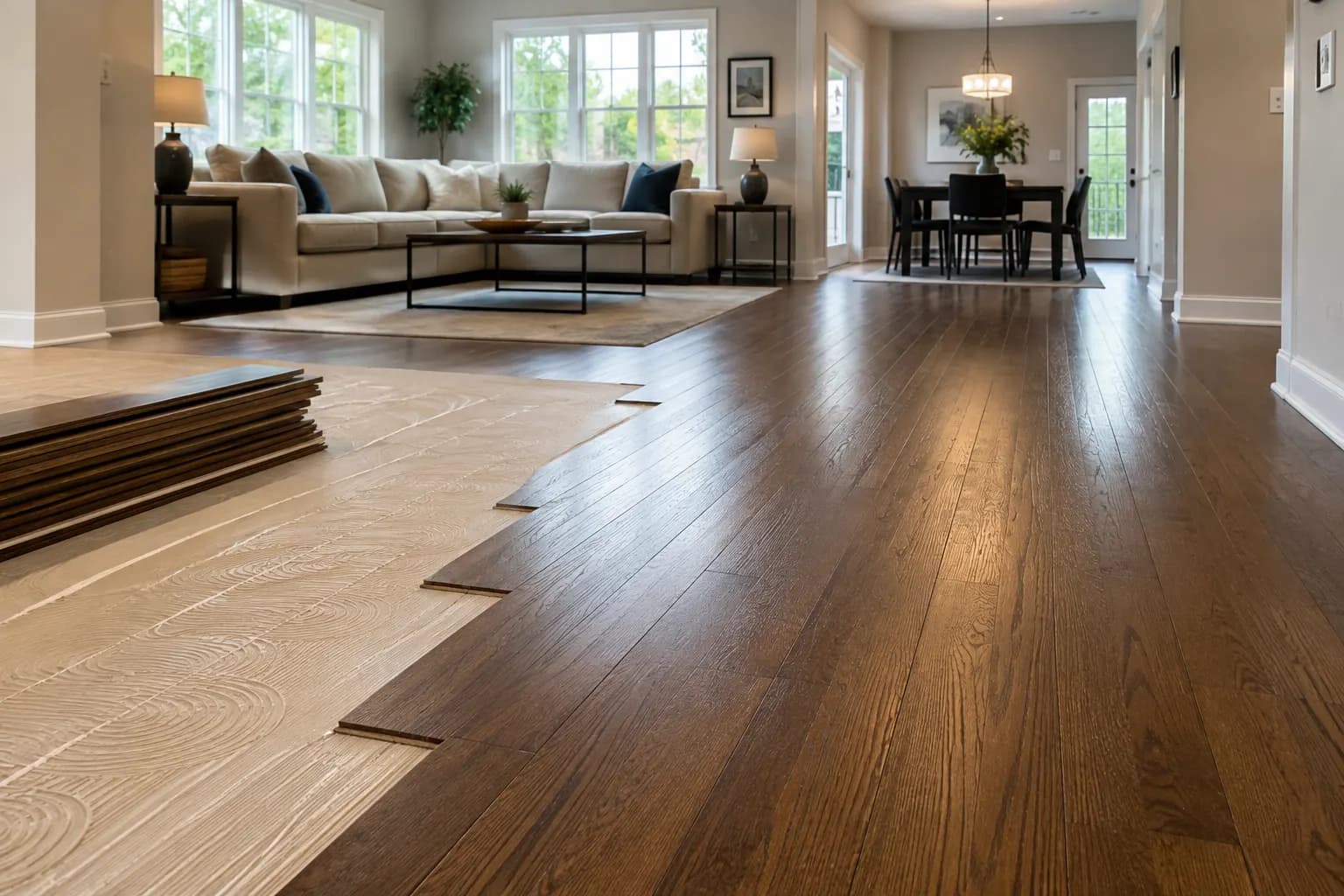
Most hardwood flooring installations follow a similar sequence: an in-home consultation to assess subfloor condition and confirm species/construction suitability, material ordering (typically 1-3 weeks depending on species and availability), acclimatization of the material to your home's humidity for several days before installation, then installation itself — typically 1-3 days for an average-sized main floor, followed by site-finishing and curing time if applicable. Radiant-heated homes require additional lead time to confirm subfloor temperature compatibility with the chosen product.
Choosing an Installer
The same principles that apply to staircase installers apply here: ask whether installation is done in-house or subcontracted, whether the quote is fixed-price and itemized by material and labour, what acclimatization process is used before installation, and what workmanship warranty is provided. A confident, specific answer to each — rather than a vague reassurance — is the clearest signal of a contractor who will deliver what they quote.
Acclimatization: The Step Homeowners Often Skip
Hardwood flooring — solid or engineered — should acclimatize to your home's temperature and humidity for several days before installation, allowing the material to reach equilibrium with the environment it will live in permanently. Skipping this step is one of the most common causes of gapping or buckling in the months after installation, and a reputable installer will always build acclimatization time into your project schedule rather than installing material straight off the delivery truck.
Subfloor Preparation
No flooring material performs well over an uneven or improperly prepared subfloor. Wood subfloors should be flat, dry and structurally sound; concrete slabs need a moisture test before any wood-based product is installed over them, particularly in basements. Addressing subfloor issues before installation — rather than after problems appear — is one of the most important and most overlooked parts of any flooring project's cost and timeline.
Transitions Between Rooms and Flooring Types
Where hardwood meets tile, carpet, or a different flooring type, a properly fitted transition strip protects the edge of the hardwood and accommodates the different expansion characteristics of each material. This is a small detail that is easy to overlook when comparing quotes, but poorly executed transitions are a common source of a floor looking unfinished even when the main installation itself is excellent.
Contact RiseOnStairs for a free in-home consultation anywhere in Brampton, Toronto, Mississauga, Oakville, Vaughan or across the GTA. We bring real material samples to every consultation, and every quote is itemized and fixed-price from the outset. Visit our hardwood flooring page to see the full range of species, widths and finishes we install.
Ready to begin?
Let's bring your vision to life
Our team of master craftsmen is ready to help you design the perfect staircase or flooring for your home.