Laminate vs Vinyl Plank (LVT) Flooring: Which Is Right for Your GTA Home?
Laminate or luxury vinyl plank? Both are durable, budget-friendly alternatives to hardwood — here is how they actually differ, and where each performs best in a GTA home.
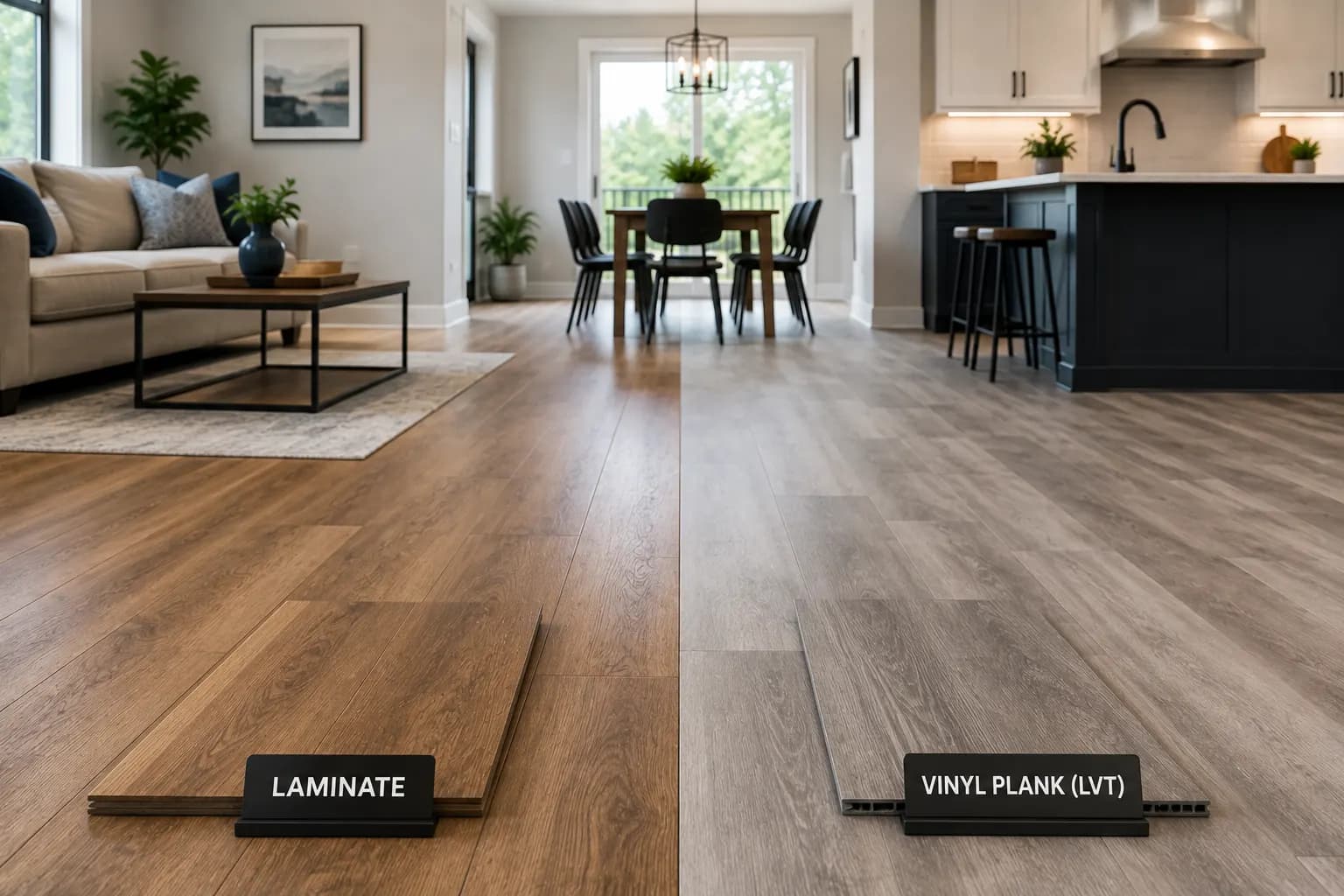
Not every room in a GTA home is a good candidate for solid or engineered hardwood — and not every budget needs to stretch to it. Laminate and luxury vinyl plank (LVT) are both excellent, durable alternatives, but they are built very differently and suit different rooms.
What Is Laminate Flooring?
Laminate flooring is a High-Density Fibreboard (HDF) core topped with a printed image layer replicating wood grain, protected by a hard-wearing aluminum oxide wear layer. It is not waterproof, though modern laminates are increasingly water-resistant for incidental spills. Laminate's key advantages are cost and hardness — the aluminum oxide wear layer resists scratches and dents exceptionally well, making it a strong choice for high-traffic secondary living spaces.
What Is Luxury Vinyl Plank (LVT)?
LVT is a fully synthetic product built from PVC layers, with a printed wood-look design layer and a clear wear layer on top. Unlike laminate, quality LVT is genuinely waterproof — not just water-resistant — making it suitable for bathrooms, mudrooms, laundry rooms and basements where any wood-look laminate or hardwood product would be a poor choice.
Waterproofing: Where LVT Wins
This is the single clearest differentiator between the two products. Laminate's HDF core will swell and delaminate with sustained moisture exposure, ruling it out for bathrooms, laundry rooms, and any area with meaningful water risk. LVT's fully synthetic construction has no such vulnerability, which is why it has become the default recommendation for below-grade basement installations and wet-adjacent rooms across the homes we work on.
Underfoot Feel and Sound
Laminate, with its rigid HDF core, tends to feel and sound slightly harder and more hollow underfoot, particularly on upper floors over a joist subfloor — a quality underlayment reduces but doesn't eliminate this. LVT, being more flexible, generally feels softer and quieter underfoot, and click-lock LVT products with an attached underlayment layer perform particularly well for sound dampening.
Cost Comparison
Both products occupy a similar overall price band, typically $5-$9 per square foot installed, with specific pricing depending on wear-layer thickness, plank width, and installation method (glue-down, click-lock, or loose-lay). Premium LVT products with thicker wear layers (20mil+) sit toward the top of this range; standard-grade laminate sits toward the bottom.
Which Is Right for Your GTA Home?
Choose LVT for basements, bathrooms, mudrooms, laundry rooms, or any space with real moisture exposure — its waterproof construction is simply the right tool for these rooms. Choose laminate for secondary living spaces, bedrooms or home offices where budget is the primary driver and moisture isn't a meaningful concern, and where its harder wear layer offers a genuine scratch-resistance advantage over some LVT products. For main living areas and primary rooms where budget allows, solid or engineered hardwood remains the superior long-term choice in look, feel and resale value — laminate and LVT are best reserved for the rooms where hardwood isn't practical or where budget genuinely requires a more accessible option.
Installation Methods: Glue-Down, Click-Lock and Loose-Lay
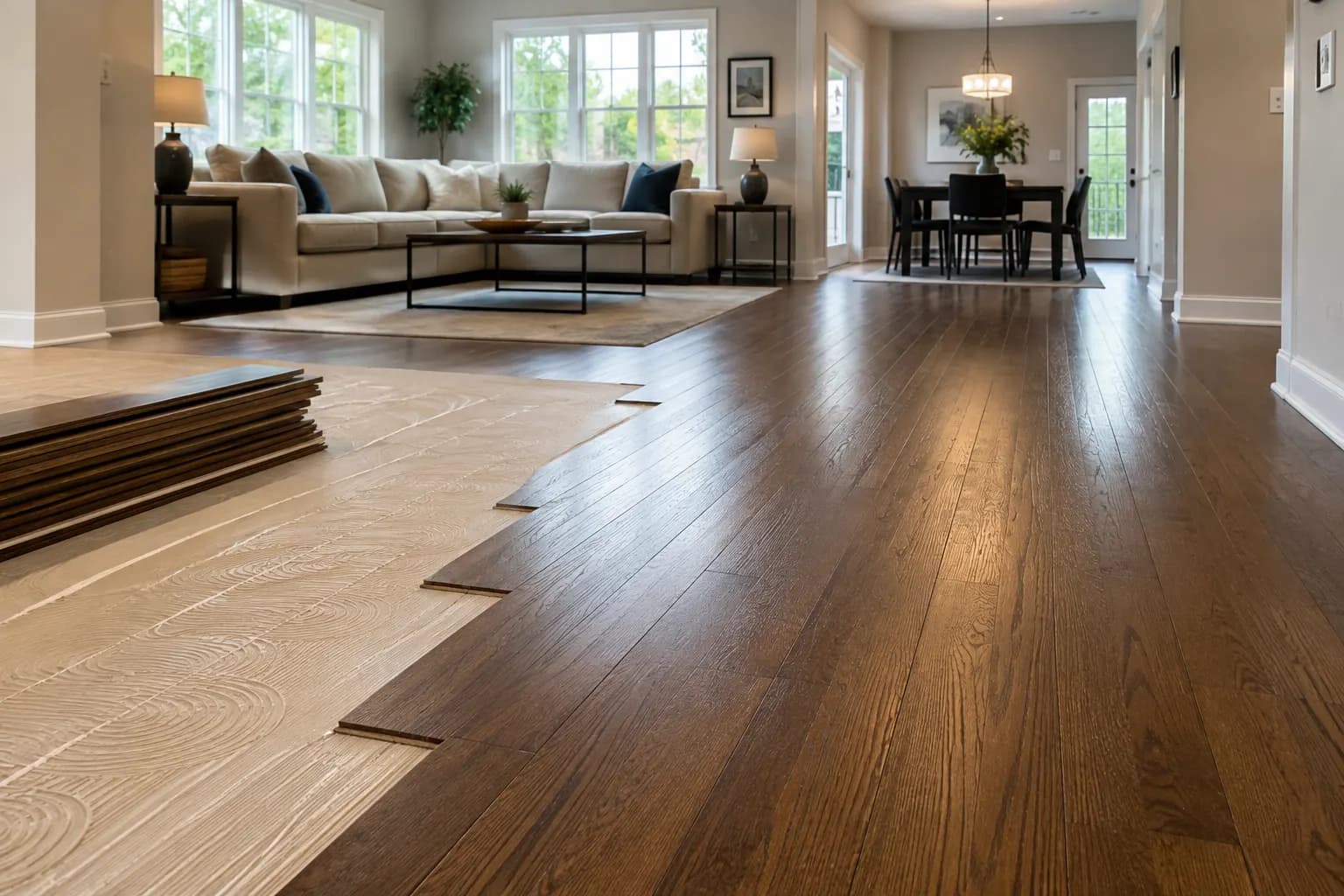
Click-lock installation (both laminate and LVT) is the fastest and most common method, with planks interlocking without adhesive — ideal for most residential rooms. Glue-down installation bonds the material directly to the subfloor, offering a slightly more solid underfoot feel and better performance in larger commercial-adjacent spaces. Loose-lay LVT relies on weight and friction alone, allowing individual planks to be replaced easily if damaged, which some homeowners value in high-wear rooms like mudrooms.
Wear Layer Thickness: What the Numbers Mean
LVT wear-layer thickness is measured in mils (thousandths of an inch) — 12mil suits light residential traffic, 20mil suits busy households and pets, and anything above that approaches commercial-grade durability. A thicker wear layer costs more but extends the time before the product shows visible wear, particularly relevant for entryways and kitchens.
Frequently Asked Questions
Can LVT look convincingly like real hardwood? Modern high-quality LVT with embossed-in-register texture (where the printed grain and physical texture align) is genuinely difficult to distinguish from real wood at a glance.
Does either option add resale value comparable to hardwood? Generally no — both are considered a step below hardwood in buyer perception, though a well-installed LVT product in a basement or bathroom is viewed as entirely appropriate for those specific rooms rather than a downgrade.
Can laminate or LVT be installed over existing tile? In many cases yes, particularly click-lock LVT, provided the existing surface is flat and stable — we assess this during your consultation.
For the full range of flooring options we install across the GTA, visit our flooring services page, or see our complete flooring guide for how these fit alongside hardwood in a whole-home flooring plan. Contact RiseOnStairs for a free consultation and quote.
Ready to begin?
Let's bring your vision to life
Our team of master craftsmen is ready to help you design the perfect staircase or flooring for your home.